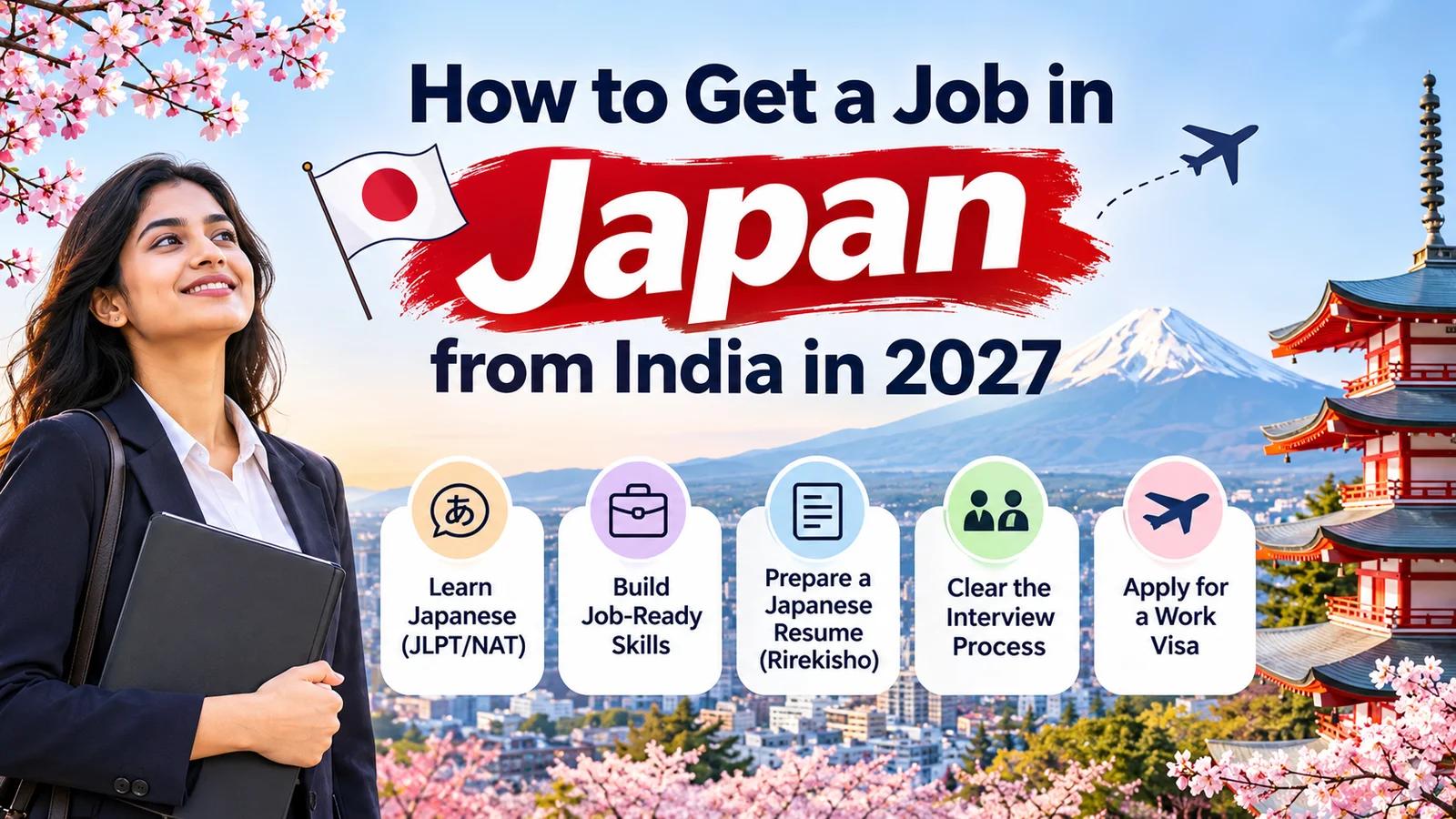
How to Get a Job in Japan from India in 2027
Updated on November 18, 2026
Japan has a shrinking workforce, record foreign-worker demand and a growing appetite for Indian talent. Searches for "how to get a job in Japan from India in 2027" are rising for good reason: the rules are changing, and the people who understand them early will have a real advantage.
But the internet is full of half-truths. Some sites promise "guaranteed Japan jobs for 12th pass." Others say you need perfect Japanese. Neither is accurate.
This guide gives you the honest picture: which visas exist, what the 2026–2027 rule changes mean for you, how much JLPT you actually need, which jobs are realistic for freshers, and a clear step-by-step plan. At Japan Visa with Chetan Sensei, we guide Indian students and professionals through this process every day, so everything below is written from that practical experience.
Quick answer: You cannot get a Japanese work visa on your own. You first need a job offer (or a valid study route) from a Japan-based employer or institution. Which visa you get depends on your degree, skills, Japanese level and the sector you work in.
Can Indians Really Get a Job in Japan in 2027?
Yes, but through the right route. Japan has no general points-based "apply and move" visa for Indians and no working holiday visa for Indian passport holders. In almost every case, a job offer or sponsoring institution comes first, and your visa follows.
The demand is real. Japan faces labour shortages in IT, engineering, nursing care, construction, hospitality, food service and manufacturing. The government has expanded skilled-worker categories and is launching a new foreign-worker system in April 2027. For Indians, the opportunity is growing, though the number of Indians in some programmes is still small, which means less competition for well-prepared candidates.
Before you apply anywhere, read our overview of the Japan visa for Indians and the latest visa rules for 2026.
Japan Work Visa Types for Indians
Choosing the right visa is the most important decision. Here are the main routes.
1. Engineer / Specialist in Humanities / International Services
This is the most common white-collar work visa. It covers software engineers, mechanical engineers, accountants, marketers, translators, planners and similar roles. You generally need a relevant university degree (or around 10 years of professional experience) and a salary equal to or higher than a Japanese employee in the same role.
2. Specified Skilled Worker (SSW) Visa
The SSW visa is for hands-on work in sectors facing labour shortages, such as nursing care, construction, food service, manufacturing and accommodation. You usually pass a sector skills test and a Japanese language test. Indian numbers are still small, which means early movers can stand out. Read our full guide to the SSW visa for Japan from India.
3. Highly Skilled Professional (HSP)
A points-based status for experienced professionals, researchers and managers. Points come from your education, experience, salary, age and Japanese ability. Reaching the threshold can fast-track permanent residence and make it easier to bring family.
4. Teaching Roles (ALT, JET, Eikaiwa)
English teaching jobs exist, but they are competitive, and requirements vary by programme. Many do not need Japanese, but a degree is usually essential.
5. Student Visa Leading to Employment
Many Indians enter Japan through a language school or university, build their Japanese and then switch to a work visa after graduation. This is often the most reliable route for freshers and 12th-pass candidates. See our Japan student visa process and student visa requirements.
What Is Changing in 2026–2027?
If you are planning for 2027, these changes matter.
1. New language-proof rules (from 15 April 2026). Japan's immigration authorities introduced extra documentation for the Engineer / Specialist in Humanities / International Services visa. For roles that mainly involve customer or interpersonal work in a language, such as interpreters, translators or hotel front-desk staff, applicants may need to show CEFR B2-level proof, which in practice means roughly JLPT N2. This generally does not apply to typical Engineer or Specialist roles where Japanese is not the core of the job.
2. The Technical Intern Training Program is being replaced. From April 2027, Japan is moving to a new system called Employment for Skill Development (ESD), designed as a roughly three-year pathway that feeds into the SSW visa. It is expected to bring standardised Japanese-language requirements, more flexibility to change employers, and an overall intake cap reported at about 426,000 in the first two years.
3. Stricter permanent residence and compliance checks. Japan has tightened guidance on permanent residence and increased scrutiny of whether your actual work matches your visa category. Keep your contract, job description and documents consistent.
4. Higher fees and more digital procedures. Immigration fees are rising and more procedures are moving online.
Rules in this area change often. Always confirm the latest requirements with the Immigration Services Agency of Japan or with a trusted adviser before paying anyone. You can follow our Japan visa rule change updates for the latest.
Is JLPT Mandatory for Jobs in Japan?
The honest answer: it depends on the job.
| Role type | Typical Japanese level |
| IT / software (English-friendly companies) | Often none to N4–N3 |
| Engineering and technical roles | N3–N2 preferred |
| Nursing care / caregiving | N4 and up |
| Hospitality, retail, customer-facing | N2 or higher |
| SSW sectors | N4 plus sector test |
| Teaching (ALT) | Usually none |
Even where Japanese is not required, it improves your offer chances, your salary and your HSP points. Learning Japanese is the single best investment you can make. Our guides on the JLPT level required to study in Japan in 2026 and whether JLPT is mandatory for a Japan student visa explain how each level helps.
Best Jobs in Japan for Indians and Salary Range
Salaries below are approximate ranges and vary by company, city and experience.
- Software engineer / IT / data / cloud: roughly ¥4–7 million per year, higher at top firms and for senior roles.
- Mechanical, electrical and manufacturing engineers: roughly ¥3.5–6 million.
- Finance and accounting analysts: often ¥4.5 million and up in Tokyo and Osaka.
- Nursing care and healthcare support: roughly ¥3–4.5 million.
- English teaching (JET-type programmes): around ¥4 million per year in the first year, before tax.
- Hospitality, food service and construction (SSW): vary by sector and region, with employers required to pay at least what Japanese staff earn.
Use foreigner-friendly platforms such as GaijinPot, Daijob, Japan Dev, TokyoDev and LinkedIn, but be careful: never pay anyone for a "guaranteed" offer letter.
Step-by-Step: How to Get a Job in Japan from India
Step 1: Choose your target route
Decide whether you are a degree holder (Engineer/Specialist route), a skilled-sector worker (SSW/ESD), or a fresher who needs the study-to-work route.
Step 2: Start Japanese now
Begin with JLPT N5, aim for N4 and then N3 or N2. Learning even basic Japanese shows employers you are serious.
Step 3: Build a Japan-ready profile
Prepare a one-page rirekisho (Japanese résumé) and a shokumu keirekisho (work history). Add your JLPT level clearly, keep it concise and tailor it to each role.
Step 4: Apply strategically
Apply to 8–10 well-matched roles every week through job portals, LinkedIn and recruiters. Target companies that already hire foreigners.
Step 5: Prepare for the interview
Japanese interviews test politeness, clarity and motivation. Practise common questions and a strong self-introduction. Our Japan visa interview questions and interview preparation guide will help, and our interview preparation service offers one-to-one coaching.
Step 6: Let your employer apply for the Certificate of Eligibility (COE)
Once you accept an offer, the Japanese employer usually applies for your COE in Japan. Read how it works in our Japan COE guide and our page on applying with a Certificate of Eligibility.
Step 7: Apply for the visa at the Japanese Embassy or VFS
With your COE, submit your visa application and documents. Use our visa application checklist for Indians so nothing is missing. Our documentation support team can review everything before you submit.
Step 8: Travel and register
On arrival you receive your residence card and must register your address at the local city office within 14 days. Budget realistically using our Japan travel cost guide.
Jobs in Japan After 12th or Without Experience
This is one of the most searched questions, and it needs a straight answer.
Is there an "unskilled" work visa for Indians who have passed 12th? Not in the way many agents claim. Japan does not offer a general unskilled-labour visa. The realistic options are:
- SSW / ESD route: hands-on jobs in sectors like caregiving, food service, construction and manufacturing. You typically need to pass a sector skills test and a basic Japanese test (around N4). From April 2027, the new ESD system is intended to become a structured entry point into these sectors.
- Study first, work later: enrol in a Japanese language school, build your language skills, work part-time within legal limits and move into a full-time job or further study. See Japan language school admission for Indian students and the April intake guide.
- Internships and apprenticeships through legitimate, government-recognised channels.
Warning: If someone promises a Japan job for a fee without a verifiable employer, it is very likely a scam. Our guide on reasons for visa rejection explains what to avoid.
The Study-to-Work Route: The Safest Path for Freshers
For most freshers, the best long-term strategy is not "job first," it is "Japan first." Here is why this works:
- You build real Japanese skills on the ground, which most employers value highly.
- You can legally work part-time within the permitted hours. Check the work-hour limits for students in 2026.
- You can attend job fairs and interviews in person.
- After graduation, you can switch to a work visa through your employer.
- You may qualify for scholarships for Indian students.
Not sure about language requirements? Read about studying in Japan without JLPT, and check the required bank balance for a Japan student visa. Our study visa guidance service covers the whole process.
Common Mistakes and Visa Rejection Reasons
- Paying agents for "guaranteed" jobs without a verifiable employer.
- A mismatch between your degree, your job role and your visa category.
- Incomplete or inconsistent documents and financial proof.
- Weak interview preparation.
- Ignoring the new language-proof rules for customer-facing roles.
- Applying with outdated information from old blog posts.
Avoid these and your chances improve considerably.
How Japan Visa with Chetan Sensei Helps You
Navigating Japan's rules alone is stressful. Japan Visa with Chetan Sensei gives Indian students and professionals clear, honest and practical guidance at every stage. See how we work, meet the team on our About page and read real feedback in our testimonials.
Our services include:
- Profile evaluation: we assess your degree, experience and Japanese level and tell you honestly which route fits you.
- Study visa guidance: language school and university admission support for the study-to-work route.
- Documentation support: careful document checks to reduce errors and delays.
- Interview preparation: mock interviews and coaching in a supportive environment.
- Transparent policies: read our refund policy and terms and conditions before you decide.
Browse all our services or explore the full Japan visa guide library.
Ready to start? Book a consultation with Chetan Sensei and get a clear plan for your Japan career.
Frequently Asked Questions
How can I get a job in Japan from India in 2027?
Choose the right visa route, learn Japanese, prepare a Japan-style résumé, apply to foreigner-friendly employers, and let your employer apply for your Certificate of Eligibility. If you are a fresher, consider the study-to-work route.
Can I get a Japan work visa without a job offer?
For most work visas, no. You need a sponsoring employer. Study visas are a separate route that begins with admission to a Japanese school.
Is JLPT compulsory to work in Japan?
Not always. Some IT and English-friendly roles do not require it, but customer-facing roles may need N2-level proof, and SSW sectors need a basic Japanese test. Higher JLPT levels improve your chances and pay.
Which jobs are in demand in Japan for Indians?
IT and software, engineering, nursing care, construction, manufacturing, hospitality, food service and English teaching.
Can I get a job in Japan after 12th?
Direct professional jobs are difficult without a degree. Realistic paths are SSW-sector jobs (with skills and language tests) or studying in Japan first and moving to work later.
Can freshers or people without experience work in Japan?
Yes, through language school, university study, internships or SSW/ESD-type pathways, depending on your profile. Many Japanese companies also hire fresh graduates.
What is the average salary in Japan for Indians?
Typically around ¥3–7 million per year depending on the role, with higher figures in IT, finance and senior positions. Your exact offer depends on the company and city.
Do I need a degree to work in Japan?
For the Engineer/Specialist visa you generally need a relevant degree or about 10 years of experience. SSW and ESD routes are based on skills and language tests rather than a degree.
How long does the Japan work visa process take?
The COE stage commonly takes one to three months, plus visa processing and travel preparation. Timelines vary by employer and category.
Can I bring my family to Japan?
On the Engineer/Specialist visa, Highly Skilled Professional status and SSW Type 2, spouses and children can usually join as dependents. SSW Type 1 does not allow family.
Is Japan Visa with Chetan Sensei a recruiter?
We are a visa and study guidance consultancy. We help you choose the correct route, prepare documents and interviews, and avoid mistakes. We do not promise jobs or visas, because decisions are made by employers and immigration authorities.
How do I avoid Japan job scams?
Never pay for a guaranteed offer letter, verify the employer's name and address, and be cautious of agents who avoid written contracts. When in doubt, contact us before paying anyone. More answers are on our FAQ page.
People Also Search For
Here are the most common related searches and where to find the answers.
- How to get a job in Japan from India in 2027 without JLPT: possible in some IT and English-speaking roles; see study in Japan without JLPT and the JLPT guide.
- How to get a job in Japan from India in 2027 Reddit: forum advice is useful but often outdated or anecdotal, so verify with our 2026 visa rules.
- How to get a job in Japan from India in 2027 for Indian candidates: start with the Japan visa for Indians guide.
- How to get a job in Japan from India in 2027 for English speakers: target IT, teaching and international companies; prepare using our interview preparation service.
- How to get jobs in Japan from India: follow the step-by-step plan above.
- How to get a job in Japan from India after 12th: see jobs after 12th and language school admission.
- How to get a job in Japan from India without experience: consider the study-to-work route and study visa guidance.
- Unskilled jobs in Japan for Indian 12th pass: explore SSW/ESD pathways in our SSW visa guide.
Final Thoughts
Getting a job in Japan from India in 2027 is achievable, but it rewards preparation, not shortcuts. Pick the right visa, build your Japanese, prepare a Japan-ready profile, and avoid anyone who promises guaranteed results. With the new ESD system starting in April 2027 and tighter documentation rules already in place, accurate guidance matters more than ever.
If you want a personalised roadmap, Chetan Sensei and the team are here to help.
Contact Us
Japan Visa with Chetan Sensei
- 📞 Phone / WhatsApp: +91 87009 56038
- ✉️ Email: info@japanvisawithchetan.com
- 📍 Address: 2/81-82, 2nd Floor, Lalita Park, Gali No - 2, Laxmi Nagar, New Delhi - 110092
- 🌐 Website: www.japanvisawithchetan.com
👉 Book Your Free Consultation Today